Can Music Therapy Help Older Adults Walk More Confidently?
How Rhythm Can Improve Balance and Gait
When Johnny Cash shared that he “walked the line,” he wasn’t talking about balance. But new research shows he could have been, as therapists are now recommending music therapy to improve balance, coordination and confidence in older adults.
“Music becomes the tool we use to improve things like strength, balance, walking and confidence in ways that help our residents stay active and fit,” says B Byrd, Board-Certified Music Therapist at EverTrue Laclede Groves Music Therapist.
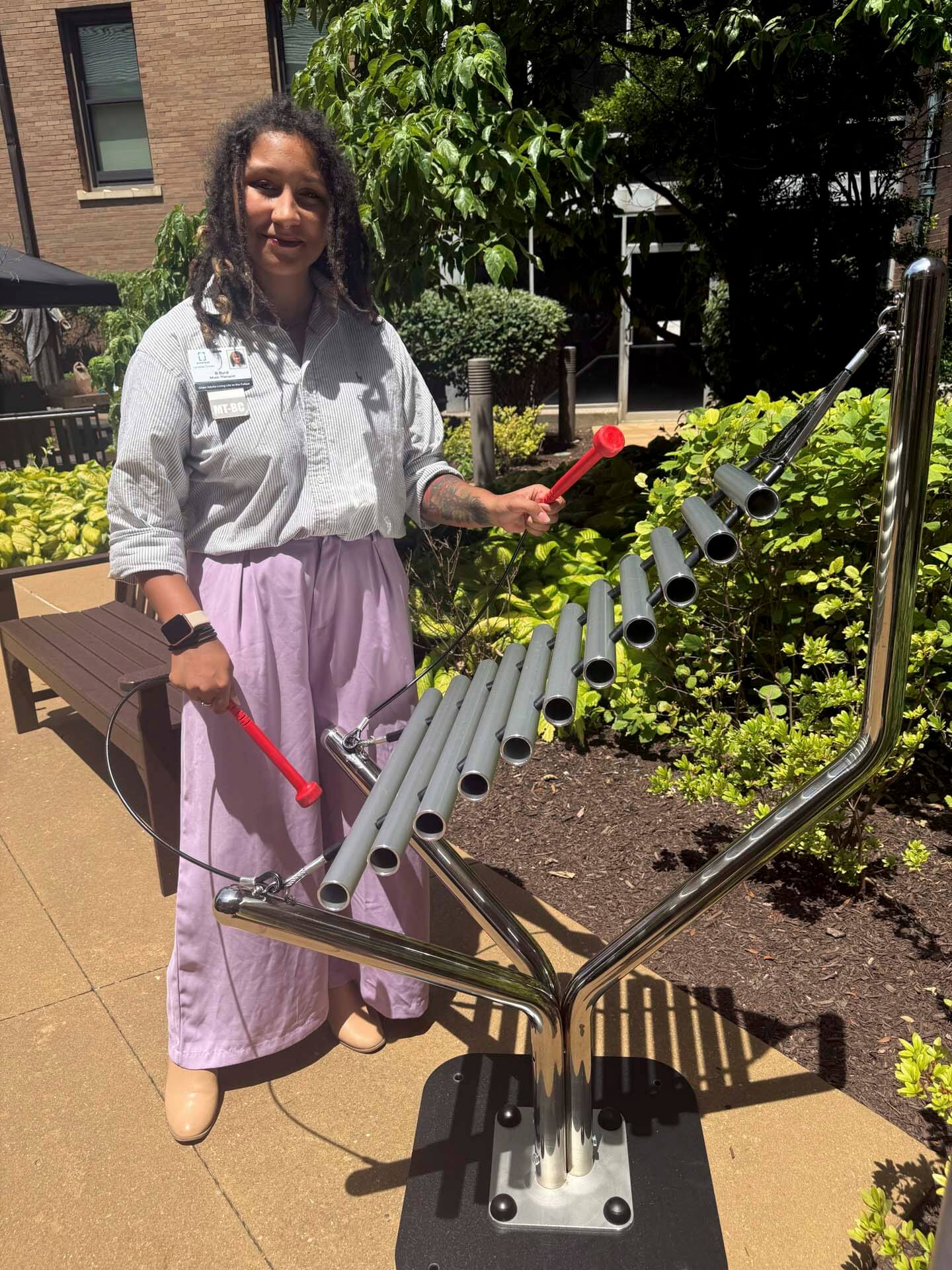
B uses evidence-based training techniques that combine rhythm, movement and personalized music to help residents achieve meaningful physical and emotional goals.
How Music Therapy Improves Walking and Mobility
According to B, research published by the National Library of Medicine highlights the growing role of music in motor rehabilitation. One of the most effective approaches is Rhythmic Auditory Stimulation (RAS), which uses a steady musical beat to help regulate movement timing and pace.
The brain naturally synchronizes movement with rhythmic sounds, allowing many people to walk with greater consistency and coordination. Studies have shown rhythm-based interventions can improve gait speed, stride length and overall walking quality, particularly for older adults and people living with neurological conditions such as Parkinson’s disease or recovering from stroke.
“For many older adults, using music to create rhythmic cues makes walking feel more natural while reducing the risk of falls and improving confidence during movement,” says B.
Personalized Music Therapy at EverTrue
At EverTrue, every music therapy plan begins with the individual. Residents are referred to B by nurses, social workers, chaplains and other members of the care team.
“I complete a comprehensive assessment that examines range of motion, grip strength, communication style, vision and other physical and cognitive factors,” says B.
“I also talk to them about their musical history: Who do they enjoy, what type of music gets them moving? Having a full picture of the individual helps to personalize the experience.”
The goal is always to improve residents’ quality of life using interventions tailored to each resident’s unique needs and abilities.
Working Out to the Beat of Your Own Drum
“In one-on-one sessions, I work with residents on things like strengthening muscles used in sit-to-stand transfers, walking to a beat to help manage gait and stretching muscles and joints.”
According to B, that simple concept is backed by neuroscience showing that a consistent rhythm provides the brain with an external timing cue, which responds to musical cues in ways traditional exercise alone may not achieve.
Music also adds something exercise sometimes lacks: joy!
“Familiar songs can reduce anxiety, improve mood and motivate people to stay engaged throughout therapy sessions, allowing them to practice movements longer and with greater enthusiasm,” says B.
Everyone is Musical
One of the biggest misconceptions about music therapy is that participants need musical talent.
“People would be surprised to know that they don’t have to have any musical background to benefit from music therapy,” B says. “We’re focusing on things they already know how to do, and the goals are based on their individual care plan.”
Whether residents are singing, tapping a rhythm or simply walking to a familiar song, the focus remains on therapeutic outcomes.
The Bottom Line: Can Music Therapy Help Older Adults Walk Better?
Research and clinical experience increasingly point to the same answer: yes.
“By combining rhythm, movement and individualized treatment plans, music therapy can help older adults improve gait, balance and coordination while increasing motivation and confidence, says B. “For many older adults, the right song can become an important part of the journey toward greater mobility and independence.”